Here’s most of the text from Sunday’s sermon (April 2, 2017) in the ‘Generosity of Soul’ series at Church Simplified:
Question: How many of you have tasted chicken adobo? How many of you also cook it? Okay, then you might appreciate this true story of an Englishwoman’s first attempt (!) at making it…
So, this was about 15 years ago, and we were living in Holland at the time. We had invited our neighbours round for a “real Filipino meal”. And since our favorite dish, when we had been living in the Philippines before then, had been chicken adobo, I thought I’d find the recipe and have a go at cooking it. I mean how difficult could it be? Well, it was a disaster. Looking back, I now realize the proportion of soy sauce to water to vinegar was all wrong. i.e. way too much vinegar. And however much I boiled and boiled it, then had to add more water, then boiled it some more, it would NOT reach that ‘adobo moment’. It simply refused to taste anything like it was meant to taste. In the end I’d boiled all the meat off the bones. So, I took away the bones, and was left with this like mushy stuff. I had no time to produce something else. So that’s what we ate. Our neighbours Theo and Ellen seemed to eat it happily enough; they thought it was some kind of fish pie. My family could hardly bring themselves to put it in their mouths. They knew what it should have tasted like.
So, what in the world has this story got to do with our theme of generosity of soul?!?
I’d like us to take an honest look at where we’re at on that journey of developing a generosity of soul. I’d like us to pause for a reality check about where we’re at, where we’re really at.
And I’d like us to have a look at a couple of potential blockages. The chicken adobo that tasted more like fish pie story has to do with the one of these ‘road blocks’.
What was the context for our friends Ellen and Theo? They were people who had never tasted adobo before. So, when presented with something called “chicken adobo”, they assumed it was… chicken adobo, and that chicken adobo should taste like fish pie. So, if ever they wanted to make chicken adobo themselves, ‘tasting like fish pie’ would be their goal! Totally not helpful!
So again, what has this got to do with generosity of soul?!
Simply this: It’s pretty difficult to give of something if we haven’t tasted it for ourselves.
To best grow in generosity of soul, we need be rooted in the generosity of God. And this is not something to experience second hand; we need to become aware of it first hand, for ourselves. Like tasting REAL adobo for ourselves, not just being told about it, or watching someone else eat it.
Last Sunday Isa shared so beautifully about generosity in the form of giving attention, and about how Jesus really saw Mary Magdalene, when the rest of society hardly noticed her. And how we need to see each other, really see each other. Spending time with each other, even (!) putting away social media and taking time to listen; truly paying attention to one another.
And I just want to come back to that point of Jesus really seeing the people around Him: Do we really believe He sees us? Do you believe He pays any attention to you, that He understands you, listens to you, LOVES you?
Let’s remember: God loving us has everything to do with Him. He loves us not because any degree of our perfection or imperfection. He loves us because that’s Who He is.
And, by the way, if this happens to be a season of waiting for you – there’s something in your life that you’re waiting on God for an answer… I was reading a blog a few days ago and someone was ‘digging a bit further down’ into why waiting on God can be so difficult for us. She compared it to something I think many of us can relate to: when you’re on the phone with customer service of say, BPI or Globe, and you’ve been put on hold, and there’s this dumb tinned music in the background, and you’re put through somewhere else, and you’re put on hold again, then you’re waiting, and waiting, and…. This blog writer was exploring what’s the most difficult thing about this experience. It’s not so much the phone bill, not the inconvenience. What’s most difficult for us to take is this: It’s the sense that we’ve been forgotten. For.got.ton.
And if you have the slightest suspicion that, though God sees everyone else, He has somehow overlooked you – let’s just bring that (maybe secret) fear of being forgotten into the light, and take a reality check about that. Then maybe it will be a childlike step of asking God for more faith to be able to grow in trust in Him.
The blog writer wrote this:
“… when God has made me wait in faith, whether it be for healing or financial provision or a new job, I have floundered by believing the lie that I’m forgotten by my creator. Thankfully, it doesn’t end there. Every time I fall into this sort of thinking, Jesus…., comes to my rescue and reminds me that even though I falter, God sees me and cares for me and loves me more than I can ever comprehend.”
– M’Lynn Taylor
One of the reasons I want to make such a big deal of each of us knowing for ourselves that God loves us, is because I think if we’re not growing in the personal knowledge of God’s love, there’s a big risk that we might be happy with things that taste like fish pie – when we should be enjoying the real thing! In other words, I might settle for a form of generosity that isn’t generosity at all, something that is actually more like… More like what? More like, for example:
A commercial attitude; which at its root is about only being ‘generous’ – only giving – for what we can get, like a transaction. Jesus is pretty no-nonsense and critical about that kind of thinking:
“If you only give for what you hope to get out of it, do you think that’s charity? The stingiest of pawnbrokers does that.”
Whoops! Contrast this with what He goes on to say:
“I tell you, love your enemies. Help and give without expecting a return. You’ll never—I promise—regret it. Live out this God-created identity the way our Father lives toward us, generously and graciously, even when we’re at our worst. Our Father is kind; you be kind.”
The apostle Paul writes:
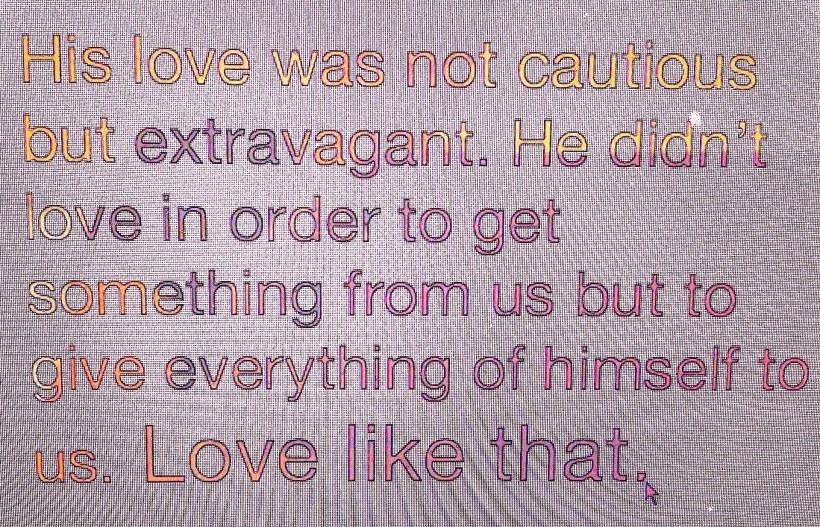
“Watch what God does, and then you do it, like children who learn proper behavior from their parents. Mostly what God does is love you. Keep company with him and learn a life of love. Observe how Christ loved us. His love was not cautious but extravagant. He didn’t love in order to get something from us but to give everything of himself to us. Love like that.”
As we taste of God’s generosity towards ourselves, we’ll realize that a commercial attitude – giving only for what I can get – has nothing to do with generosity of soul. Just has fish pie has nothing to do with chicken adobo!
We see parallels in the NGO world. As many of you know, Paul and I work for an NGO called Young Focus. Sometime companies contact Young Focus wanting to come and volunteer, or to donate something. And we’ve had to learn through the years that, for a few of those companies, their motivation has more to do with self-promotion than with charity.
Even with individual volunteers: we’ve had hundreds throughout the last ten years – coming from all over the world (especially Holland), as well as the Philippines, of course – and 99.9% of them have been truly wonderful. But there has just been the odd one that it was more to do with what they could put, for example, on their Facebook wall or in their travel blog, than coming to help. And it shows in subtle ways, for example, they very much have their own agenda and aren’t that open to just being involved in whatever is going on.
And the irony is that it’s those companies or individuals whose root motivation is what they can get out of it, it’s those people themselves who end up missing out. Being busy with their own agenda gets in the way of seeing the beauty of what is really happening, how God is empowering the poor through education!
Now there’s something else that can get in the way of generosity of soul. Here’s a personal confession: I have sometimes wrestled with something that is a very effective blockage. And I just want to take a few moments to talk about it in case any of you can relate…
Some weeks ago, Jonathan mentioned the big “H” word – hatred. I’d also like to mention the big “A” word – Anger.
I was raised in a home where there was a lot of stress. Especially to do with my father. He had a past life that was kept secret from everyone. Only my mother knew. And this big secret wasn’t to come out till I was in my forties. (Another story for another time.)
Children growing up in stress develop instinctive ways of coping. Not a thought through plan, it’s pure survival instinct, a coping mechanism, and becomes an automatic response. My way of trying to deal with stress was to be a good girl with a big smile stuck on my face (which was to become a mask later in life). My deepest drive was to avoid confrontation at all costs. This meant that any expression of anger could have no place in my life. So every time even a hint of irritation in myself came up, I automatically buried it. And I became very good at it.
So I get through my childhood and teenager years, my mask with a plastic smile on still firmly in place. Then in my late teens, early twenties my best friend was a girl called Pauline. Although we were best friends, we were also quite different from each other. One of these differences was that Pauline had no fear of confrontation, and was totally free to express anger or disagreement. Also, whereas I tried to be the ‘perfect friend’, Pauline would take the liberty of being pretty annoying at times if she wanted to… But I could take it all, without batting an eyelid. You see, I had great training at home.
But then… one weekend I was staying at Pauline’s house, and, at a certain point she said something, which I guess must have been the proverbial last straw that broke the camel’s back. And it triggered the dam to break, the volcano to erupt. You have never seen anything like it. Certainly poor Pauline hadn’t.
It was like all the anger of 20 years poured out, erupted out. I was shouting and screaming at her like a mad woman. I raced upstairs before I could say anything too bad, and lay on my bed in the guest room. My whole body went stiff as a board and I couldn’t move for maybe 5 – 10 minutes. After I’d recovered, I went to the bathroom to splash some cold water in my face. I actually felt so relieved, so unburdened, so light, but I wanted to go back downstairs and check if poor Pauline was okay. Looking up in the cabinet mirror over the sink, I’ll never forget what I saw. My eyes were just full of red dots. In my anger, I’d literally burst lots and lots of blood vessels.
So… I have a bit of a history of not quite getting the balance right when it comes to anger!!
Now, anger is not necessarily bad at all. In fact, we see anger getting the green light, so to speak, in the Bible, with some very practical advice on how to be angry. And what a revelation it has been for me…
“Go ahead and be angry. You do well to be angry—but don’t use your anger as fuel for revenge. And don’t stay angry. Don’t go to bed angry. Don’t give the Devil that kind of foothold in your life.”
Coming back to our food theme: I would like to propose that anger is a bit like a tasty melted cheese sandwich from El Union. You should treat it appropriately: You should eat it, or, if you must, give a bit to your dog. But you should not leave it around; definitely NOT push it under a mat, or under the bed where it will fester and get very smelly. But neither should you throw it around, or smear the walls with its contents!
In other words, if we don’t deal with our anger appropriately, it will clog up our souls, and it will be much harder to be free to be generous with divine generosity.
Well, how about some answers??!
Going back to the chicken adobo disaster: Our friends Ellen and Theo were stuck in a lie and needed a reality check, to see that: a) what they had eaten was NOT chicken adobo; b) real chicken adobo tastes nothing like fish pie. Once they would have these realizations, then they can move forward with their lives and choose to find out what real chicken adobo does taste like.
The same is true for us IF we realize that we don’t actually believe we’ve tasted God’s generosity. If we discover that this is our reality, then we have the choice to move forward and figure out why that is, and maybe even ask for help or prayer.
And it’s often the case that we needn’t just sit around and wait for these ‘road blocks’ to somehow evaporate. It can be in the very action of stepping out and trusting God – while at the same time recognizing the reality of our blockages and weaknesses – that we find answers. Trusting God in the dark, so to speak. It’s also like the picture of a path, a journey. And there’s a wall blocking our way. Instead of just letting it stop us moving forward, we need to walk right up to it. Maybe it’s not a wall of a commercial attitude, or anger; maybe it’s a wall of fear or insecurity or cynicism. And when we dare to look at the reality of our lives, at the walls that block us moving forward, whatever is actually paralyzing us, maybe then we’ll start seeing that there are actually doors through the walls as well.
So, what does “stepping out and trusting God” mean in your particular situation? Does it mean, for example, coming out of your comfort zones and relating to others from completely different walks of life:
Sometimes it’s just a matter of equaling the playing fields. What do I mean? I mean: Creating spaces where we can meet, interact, engage with others, even if for a moment.
Some of my most precious memories are moments shared with folks from completely different backgrounds than my own.
Of course, I also have my moments of dismay and despair. And I’m clinging to God for courage. So we keep walking, and discover new freedoms to go where we haven’t gone before!
Or maybe we need courage in situations that are familiar, but we suddenly unexpectedly lose the ability to cope. That can happen in the very human stages of life, like sickness or overtiredness or depression…
In the frailty of our humanity, how much more do we need the divinity, the supernaturalness of GOD’S love, HIS generosity. Let’s look at how Jesus describes THIS love:
“To you who are ready for the truth, I say this: Love your enemies. Let them bring out the best in you, not the worst. When someone gives you a hard time, respond with the energies of prayer for that person. If someone slaps you in the face, stand there and take it. If someone grabs your shirt, giftwrap your best coat and make a present of it. If someone takes unfair advantage of you, use the occasion to practice the servant life. No more tit-for-tat stuff. Live generously. Here is a simple rule of thumb for behavior: Ask yourself what you want people to do for you; then grab the initiative and do it for them! If you only love the lovable, do you expect a pat on the back? Run-of-the-mill sinners do that. If you only help those who help you, do you expect a medal? Garden-variety sinners do that. If you only give for what you hope to get out of it, do you think that’s charity? The stingiest of pawnbrokers does that. I tell you, love your enemies. Help and give without expecting a return. You’ll never—I promise—regret it. Live out this God-created identity the way our Father lives toward us, generously and graciously, even when we’re at our worst. Our Father is kind; you be kind. Don’t pick on people, jump on their failures, criticize their faults—unless, of course, you want the same treatment. Don’t condemn those who are down; that hardness can boomerang. Be easy on people; you’ll find life a lot easier. Give away your life; you’ll find life given back, but not merely given back—given back with bonus and blessing. Giving, not getting, is the way. Generosity begets generosity.”
These last four sentences – “Be easy on people; you’ll find life a lot easier. Give away your life; you’ll find life given back, but not merely given back—given back with bonus and blessing. Giving, not getting, is the way. Generosity begets generosity.” – these are facts of life, – “generosity begets generosity” – like the sun warms you up, like the snow cools you down, forgiveness eventually heals, vengeful anger ultimately destroys. It is not a trade agreement, not a business transaction, nor a deal God signed with us. We’re generous, not because we want something out of it, not because we want approval, not because we want someone to be generous back. We love, we forgive, we’re generous, because that’s how God is, and that’s how we’re experiencing Him.
And, please, again, let’s be honest – if the reality is that, as far as you’re aware, you’re NOT experiencing God’s love, then that is where you have to begin: a reality check of where you are at right now. There’s no point going off to hike a mountain, if we haven’t got the necessary climbing equipment or walking shoes. There’s no point cooking a wonderful meal for guests if our kitchen is empty. There’s no point in making chicken adobo if we haven’t got the right recipe and haven’t a clue what it tastes like!
There’s no point of telling yourself that you’ve got to be generous of soul, to love others, even love your enemies, if you don’t actually believe that God loves YOU! THAT first needs looking at.
BUT, as soon as the realization is dawning, God really loves you, then I believe you are automatically ready, instantly qualified to love others. You don’t need to wait till you’ve taken a 4-year degree in theology, or been on 5 missions trips, or even joined a church, before you can start sharing God’s love and start simply living out the life and generosity He’s putting in you.
Let’s bake cookies for the neighbours no one else talks to.
Let’s pray for the lonely looking teenager you spotted waiting at the LRT station.
Let’s volunteer for Walkway.
Let’s each of us use our unique personality, our unique creativity to think up ways to bless those around us.
One evening, about 32 years ago (I was 25 at the time) I was sitting in a Christian coffee bar in the red light area of Amsterdam, sharing a cup of coffee with a German drug addict. I was training with Youth With A Mission, and I will never forget that moment: it was a turning point for me. You see, as I sat across the table from this man, as I listened to his story and his half-crazed drug induced speech, as I looked at him, his long wild hair and bedraggled clothes, it was so glaringly obvious that our backgrounds were vastly different, we had barely anything in common. So how could I possibly help him?! How could I be so naïve to think someone like me with such a relatively sheltered background could understand anything this poor guy was dealing with. But as looked at him and listened, I realized a simple startling truth: God’s love qualified me.
God’s love qualifies us to reach out to a broken world.
And maybe you started off this way, but got your fingers burnt, or had some negative experiences, there has been push back or misunderstanding, and you’ve now become silently cynical. Or maybe you’re just weary with the whole thing…
Boy oh boy have I got some great news for you: Yup life stinks and can be sickeningly unfair. Maybe you have rotting, festering old cheese sandwiches of anger everywhere.
To the extent that our journeys overlap, may I encourage you to take a look at anything that is like a shell of isolation over your life, be it unresolved anger, or bitter disappointment, or fear of failure, or protective apathy. Let me ask you: Would you like any of that to change? Let God meet you where you’re REALLY at, your eyes wide open.
Notice, when we encourage each another, “courage” is literally in the word “encourage”. As I mentioned, we need courage to live the life of generosity, divine generosity!
You know, God’s radical love isn’t meant to be some kind of optional extra only reserved for the super Christians:
“To you who are ready for the truth, I say this: Love your enemies. Let them bring out the best in you, not the worst…” “… Why are you so polite with me, always saying ‘Yes, sir,’ and ‘That’s right, sir,’ but never doing a thing I tell you? These words I speak to you are not mere additions to your life, homeowner improvements to your standard of living. They are foundation words, words to build a life on.”
“Love your enemies…” Actually, what we mistake for the ‘optional extras’ are the ‘life and death essentials’, the foundations.
The qualification? “To you who are ready for the truth”.
What qualifies us to reach out to a broken world? God’s love.
And what qualifies us to be channels, vessels, people of this kind of radical love? That we’re ready for the truth, that we’re open to the reality of Who God is and who we are.
And I want to close by coming to the very essence of everything (!): the relationship between God and ourselves. These are four sentences that have grabbed me the last month or so, and won’t let go:
“Don’t grieve God. Don’t break his heart. His Holy Spirit, moving and breathing in you, is the most intimate part of your life, making you fit for himself. Don’t take such a gift for granted.”
Part of me want to just stop here and spend the rest of the week, the rest of my life, taking this in. But for now, two things here to pause and reflect on:
“Don’t grieve God. Don’t break His heart.”
The fact that we can affect God in this way is just mind blowing. And it speaks of such love and connection – a love and connection we are often so unaware of from our side.
Then: “… His Holy Spirit, moving and breathing in you, is the most intimate part of your life…”
Fully understanding how intimately God is involved in our lives will take, I believe, the rest of our lives. It’s a divine, awesome, mystery! And it gives us a clue to how God is so deeply and intimately involved in our lives, whether we’re aware of it or not.
And I want to give the last word, to the apostle Paul, by looking again at the first two verses of his letter to the Ephesians:
“Watch what God does, and then you do it, like children who learn proper behavior from their parents. Mostly what God does is love you. Keep company with him and learn a life of love. Observe how Christ loved us. His love was not cautious but extravagant. He didn’t love in order to get something from us but to give everything of himself to us. Love like that.”
Let’s love like that.

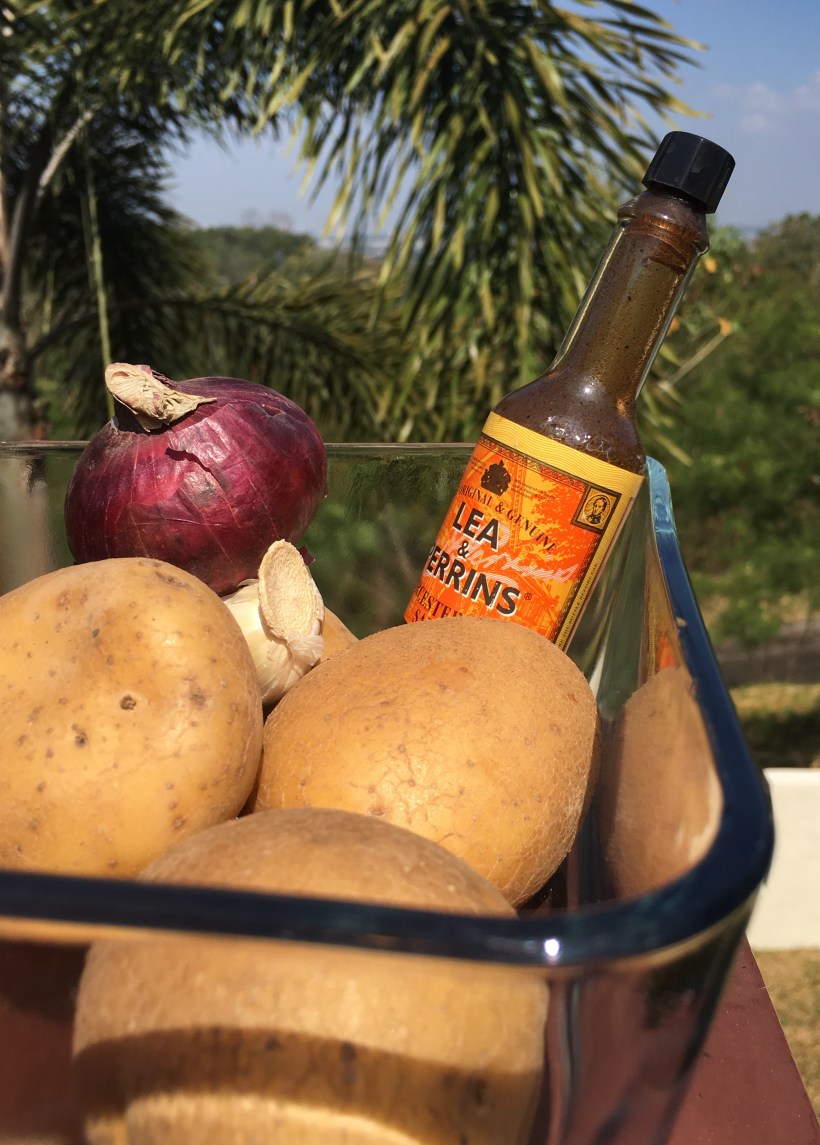
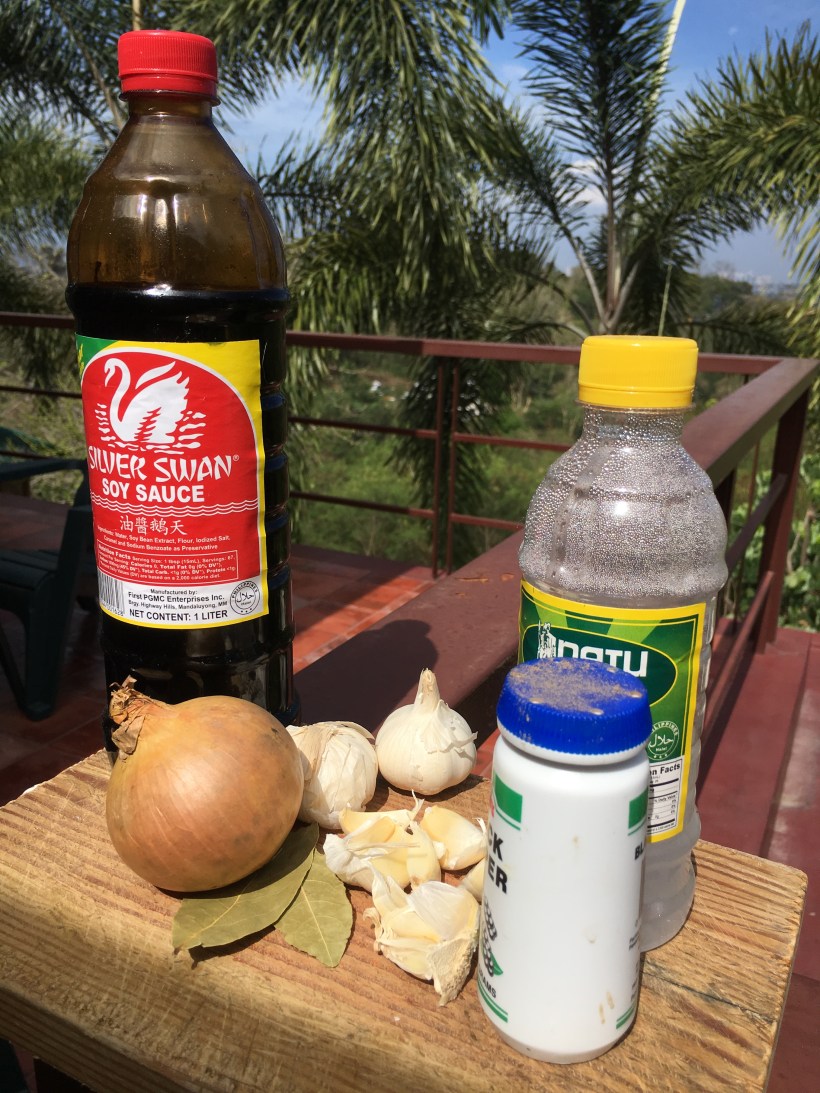 Whenever someone asks me what my favorite Filipino dish is, my immediate, enthusiastic response is “CHICKEN ADOBO!”



 CrackedCeiling