SMELLING IS BELIEVING

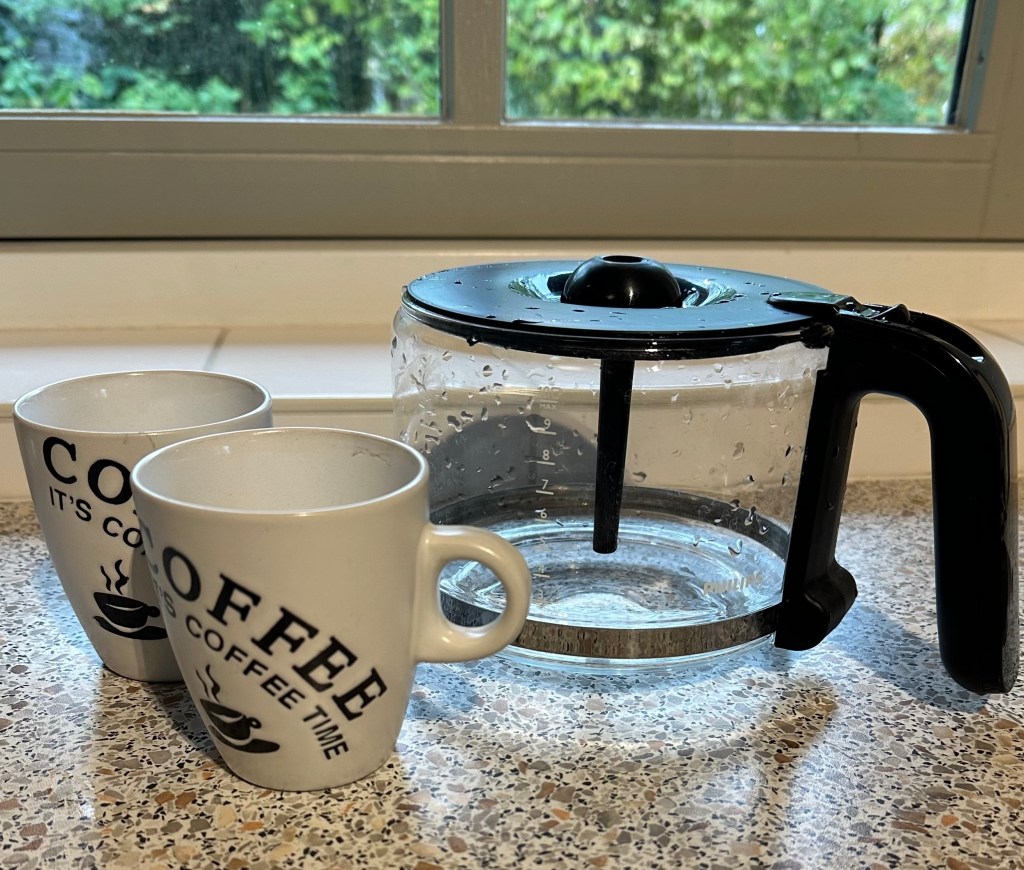
Our sense of smell is very closely linked to our memories apparently. I can believe it (mostly!) – simply from lived experience. How about you? This recent poem was inspired by the smell of way-too-old coffee:

THE NOSE DOESN’T LIE

The nose doesn’t lie,

except that one week six years ago

I was convinced to the point of disgust:

morning coffee smelled as beef stew,

but it was a blip in the brain,
otherwise known as Covid-induced parosmia.

Caffeine obsession had to stand by my side and swear

I’d taste no meaty broth.

//

The nose doesn’t lie,

except that one hour twenty years ago

I was convinced to the point of panic:

rubber was melting,

but it was a blip in the brain

otherwise known as a migraine-less aura.

Husband had to stand by my side and swear

he could smell no burning.

//

The nose doesn’t lie,

even that moment forty years ago

I was convinced at first it couldn’t be true:

the odour of anxiety,

but it was no blip in the brain–

these were my senses unwillingly attune,

husband at my side, he utterly consumed

by a tsunami of terror.

//

The nose doesn’t lie

across a childhood fifty years ago.

Am since convinced it could be true:

fear had a fragrance.

No blip in the brain,

but the bitter edge, a familiar sore,

one parent absent while present, so utterly consumed

by a lifetime of anguish.

//

The nose doesn’t lie:

this morning’s coffee grounds

convince me to the point of disgust–

their acidic stale breath

is no blip in the brain,

but the odour of age and oxidization.

Caffeine obsession stands by my side in silence, why can I

only think of Dad?

First published in As It Ought To Be Magazine: https://asitoughttobemagazine.com/ann-van-wijgerden-the-nose-doesnt-lie/

poem: LIVE CAM

Watching Philippine Hawk Eagles raise their chick during Covid-19 lockdown

chlorophyll veils 

your edges 

light shifts 

blurs 

tethers 

your piecing beak 

eyes

noble neck 

nest 

brooding solid

while all earth 

sways

First published in Honeyguide Literary Magazine, October 2023: https://www.honeyguidemag.com/live-cam-ann-van-wijgerden?fbclid=IwAR2eedUargNsL2si9lAEOrDE27wZhJenigwLtdMLWGixHpWfv-ZsmUcLwr0

Germination

Something I read recently caught me by surprise. It was something mentioned in passing, ‘tucked away’ in a much bigger message about a completely different subject. But, in that moment of reading, it was like catching sight of a hidden gem. Here it is:

“You were well aware that the reason I ended up preaching to you was that I was physically broken, and so, prevented from continuing my journey, I was forced to stop with you. That is how I came to preach to you.”

Paul’s writing to the folks in Galatia, in modern-day Turkey, and reminding them how their community first began. (Galatians 4:13; The Message)

It struck me that the amazing stuff which was to happen afterwards, in a way all started with the messy reality of Paul’s physical limitations.

This is a particularly encouraging thought for me today as I reflect on how life tends to confront us with our own limitations. But here’s the thing: these limitations don’t disqualify us from God’s love. In fact, I have a hunch they make us even more eligible –

for divine love, 

for how God would bless others through us, 

for new resources of hope, wisdom, especially of courage.

We don’t have to wait for the moment (the Inevitable Never) when we’re completely ‘fit for service’, or as if God’s love was something we first needed to deserve.

After all, love’s moment is now.

Unpromising, difficult circumstances are sometimes the fertile ground for rich blessings. Seeds of good(even great)-things-to-come can be planted in our limitations, germinated in our very brokenness.

We’re not disqualified by our frailty.

What challenges are you facing? 

Can acknowledging the reality of our limitations, weakness, brokenness, actually open up the way to receiving God’s grace, strength, courage and LOVE?

It’s OK to be Not OK

Several years ago, my Dutch nephew, who lives in the U.K and was studying theology at the time, recommended a book by a Filipino pastor. Intrigued by the title, as well as the route of the recommendation, I got hold of a copy and read it. 

‘It’s OK to be Not OK: The Message of the Lament Psalms’ by Federico (Rico) G. Villanueva is a gem of a book! First published, I think, around 9 years ago, it paved the way, gave us permission perhaps, for Filipino and Dutch and British Christians alike, to be a little bit more honest and a little bit less ‘happy-clappy’. 

The main message I remember from that book is about how, at certain points in our individual and collective lives, lamenting is not an optional extra. 

In some situations, it’s the only legitimate next step.

By the way, lamenting is not just an ‘Old Testament thing’. Jesus lamented over Jerusalem, over the death of his friend Lazarus, in the garden of Gethsemane, on the Cross…

To lament means, for example, to weep, wail, complain, grieve, howl, moan, cry out. 

>> How do we lament?

Very recently, our own pastor in the Philippines talked about ‘The Language of Lament’. 

You can watch it here:

“You’re given permission to sit in your pain and sulk in it and think about how you felt,” he says.

Also collectively, as a community, as a society: “There’s a way lamenting can actually lead to social change.”

Lamenting is sometimes the only appropriate response to a reality check. 

And the only way to move forward: 

to joy, to love, to forgiveness, freedom, 

to action.

As Pastor Bebs asks: 

>> Have we given ourselves the chance to lament?

>> Have we given ourselves permission to use robust language to express what we felt when our world fell apart?

>> It’s not meant to be a permanent exercise, but have we ever gone through the few moments just to admit that something actually hurt? And in that admission, that it would fester less, that we would be able to release it and find healing.

NB. Related to the subjects of collective reality checks and lament, two articles: